What Will My Son Look Like? See Your Future Boy
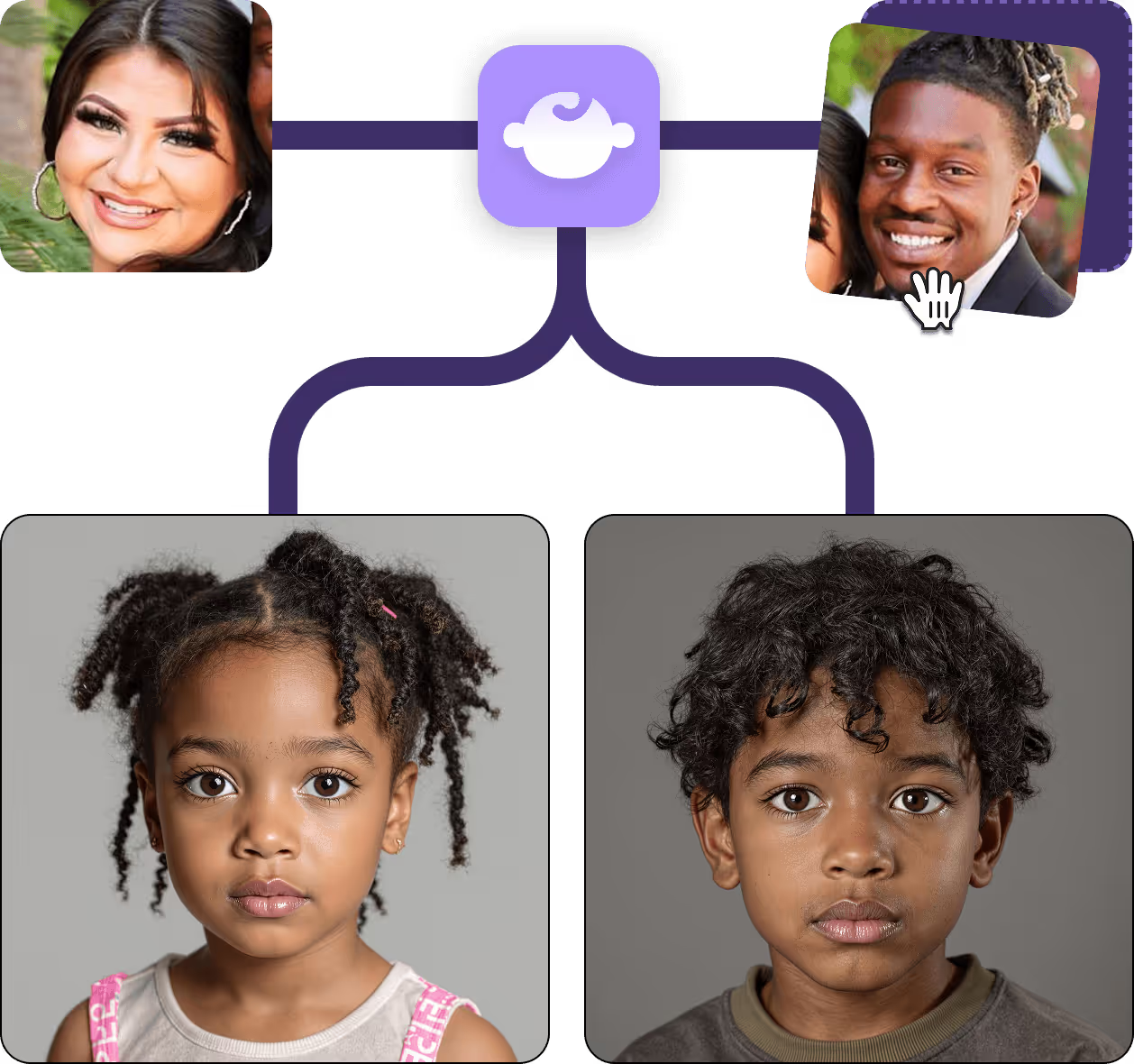
Upload one photo of each parent and see your future son — as a newborn, as a child, or as a grown man — with AI that blends both of your faces.
One-time payment, no subscription
How It Works
Experience the magic of seeing what your baby will look like with our advanced AI baby generator.
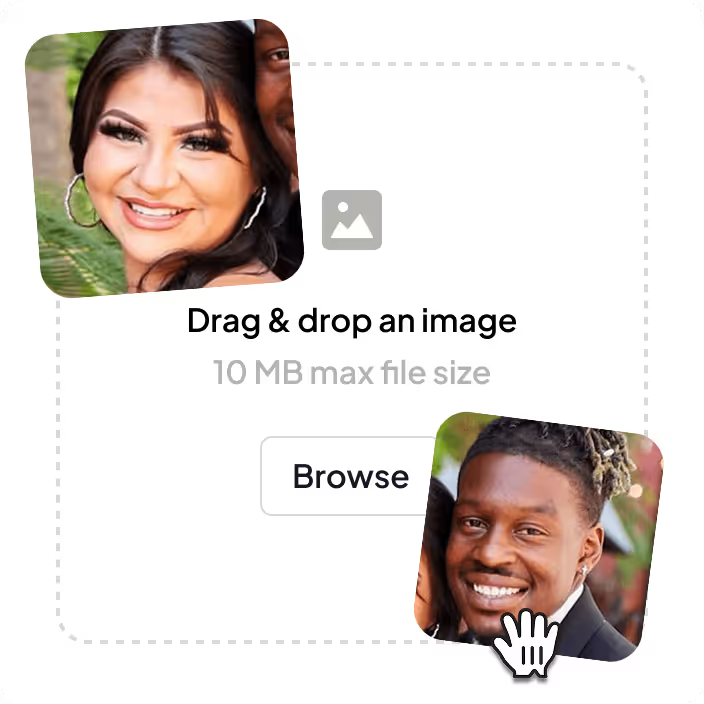
Step 1: Upload Your Photos
Simply upload photos of both parents. Our AI analyzes facial features to predict what your baby will look like with stunning accuracy.
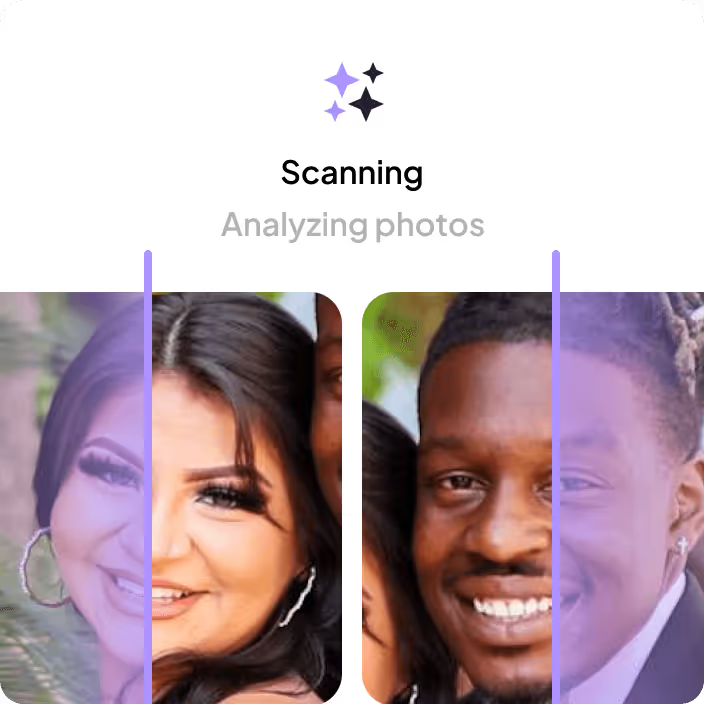
Step 2: Our AI Creates the Magic
Our advanced AI combines your features to generate a realistic baby prediction in seconds. See what will your baby look like.
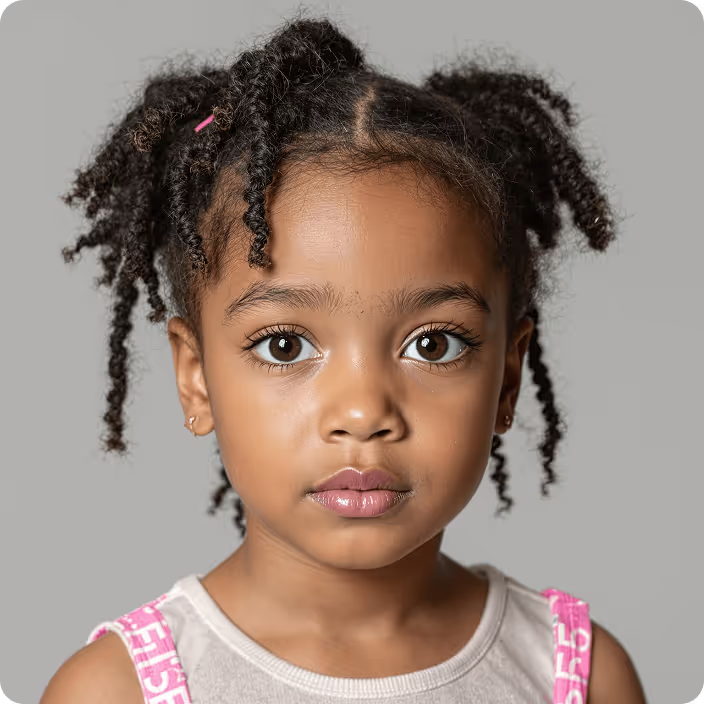
Step 3: Meet Your Future Baby
See a lifelike prediction of your future child at different ages. Share the joy with family and friends in just a few clicks!
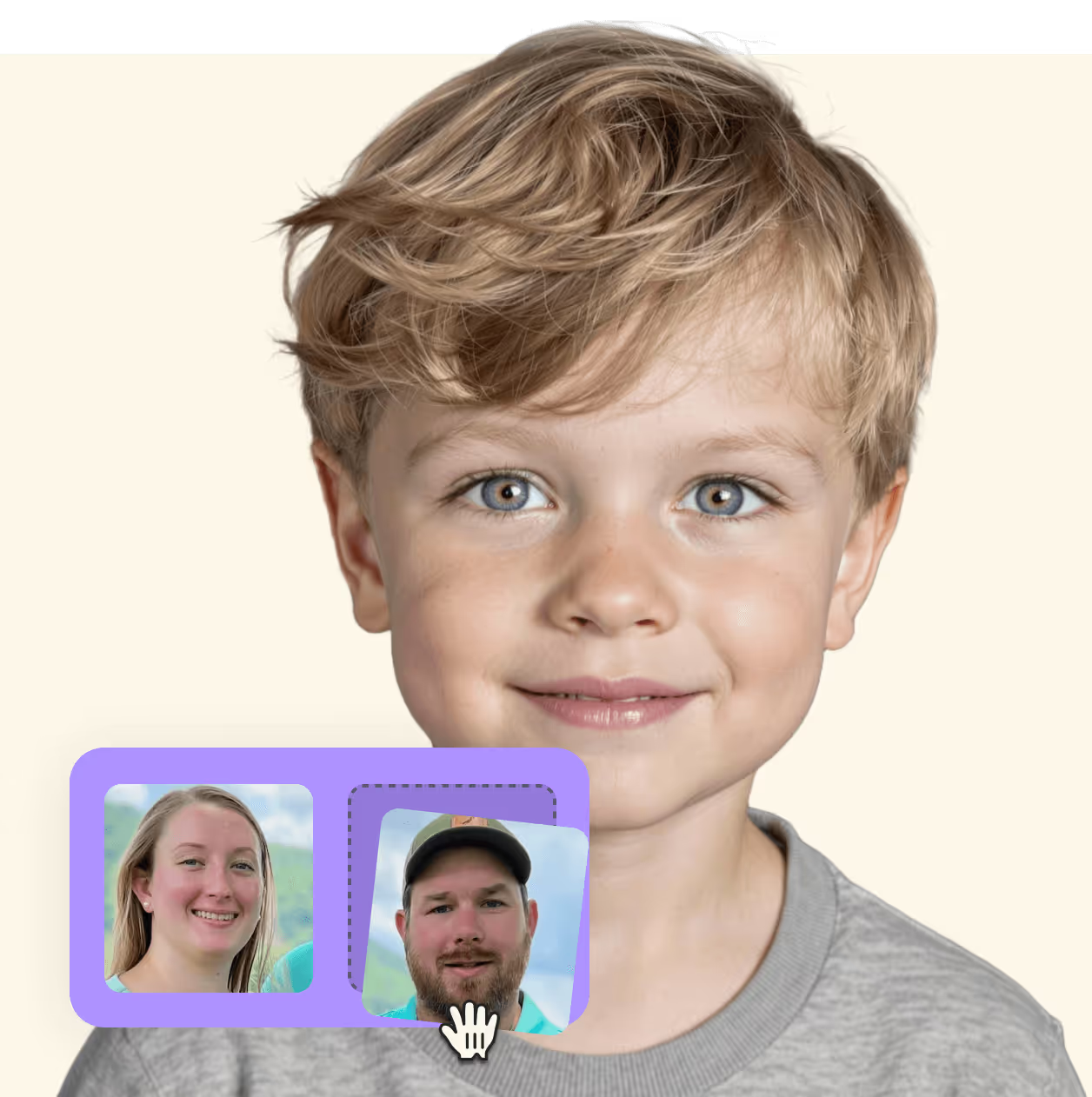
What Does a Son Inherit From Each Parent?
One chromosome settles the question of sex, and it comes from the father. A son inherits a Y from his father and a single X from his mother; the father's X goes only to his daughters. The SRY gene on that Y switches on male development within the first weeks of pregnancy.
Everything about his face, though, is polygenic — face shape, nose, lips and jaw each draw on dozens of variants from both sides, so a son can favour his mother's features as readily as his father's. What changes is the timing. Testosterone through puberty lengthens the jaw and heavies the brow, which is why a boy's resemblance to his father often reads more strongly at sixteen than it did at six months.
Height is where the two parents combine most predictably. The mid-parental method used in paediatric growth checks adds about 13 cm (5 inches) to the mother's height and averages that with the father's; most boys land within roughly 10 cm either side of the result. It gives you a range, not a number, and nutrition, health and the timing of puberty all move it.
His single X has one further consequence. Anything recessive on that chromosome has no second copy to mask it, which is why red-green colour vision deficiency reaches roughly 1 in 12 men but only about 1 in 200 women — and why it travels down the mother's line.
58,800 AI Babies Generated For 2450+ Happy Parents!
Join thousands of future parents who've already experienced the joy of seeing their future child through our AI baby generator.

Miguel & Isabella
Customers


James & Maria
Customers


Erik & Anna
Customers


Thomas & Sophie
Customers

S
Sarah
December 24, 2024
Omg this is amazing!!
Literally cant believe how good this is!! the baby looks exactly like mix of me and my hubby, we've shown it to whole family and everyone is crying.
EW
Emily W.
December 24, 2024
Pretty skeptical but IMPRESSED
Ok ngl i thought this was gonna be some scammy thing but holyyyyy these pics are INSANE. Got the premium package and its worth every penny fr.

James L.
December 24, 2024
Best money spent in my life
Wasnt sure about this at first but wow!!! My wife couldn't stop crying when she saw the pics. The baby has her nose and my eyes, its crazy accurate!!
D
David
December 24, 2024
Worth the money 100%
The elite package is expensive but trust me you want all the different ages!! We got 48 pics and each one is so different and special. Will treasure forever!
See What Your baby Will Look Like With Accurate AI Predictions
Experience the advanced AI baby generator that captures not just facial features, but the essence of your unique love story in every prediction.
High Accuracy
Our AI meticulously analyzes every facial detail, ensuring your future baby's features reflect both parents perfectly.
Almost Instant Results
Skip months of wondering and see your potential baby in minutes. The future of your family is just moments away.
Multiple Variations
Explore different possibilities of your future child at various ages, dressed differently, or in unique settings.
Private & Secure
Your photos and predictions stay completely private. We delete all data after processing for your peace of mind.
Advanced AI Technology
Built with cutting-edge AI that understands complex genetic combinations to create hyper-realistic predictions.
100% Custom Made
Every prediction is uniquely generated from your photos – no templates, no generic results, just your future baby.
Does Baldness Really Come From the Mother’s Side?
Half true, and the half that is wrong matters. The strongest single locus for male-pattern baldness is AR, the androgen receptor gene, and it sits on the X chromosome — the one a son gets from his mother. That is where the advice to look at your mother's father comes from.
But baldness is nowhere near a one-gene trait. The largest study so far, a UK Biobank analysis of 205,327 men, mapped 624 independent loci; the 26 on the X chromosome together accounted for about 12% of the heritability it could measure. The remaining ~88% sits on the other chromosomes, which arrive from both parents in equal measure.
So a maternal grandfather with a full head of hair is weak reassurance, and the father's hairline is real information. The same one-gene-one-parent shortcut gets applied to eye colour, hair colour and height, and it is wrong in the same way each time: these are traits where many genes each contribute a little. If you want the mechanics, start with dominant and recessive traits.
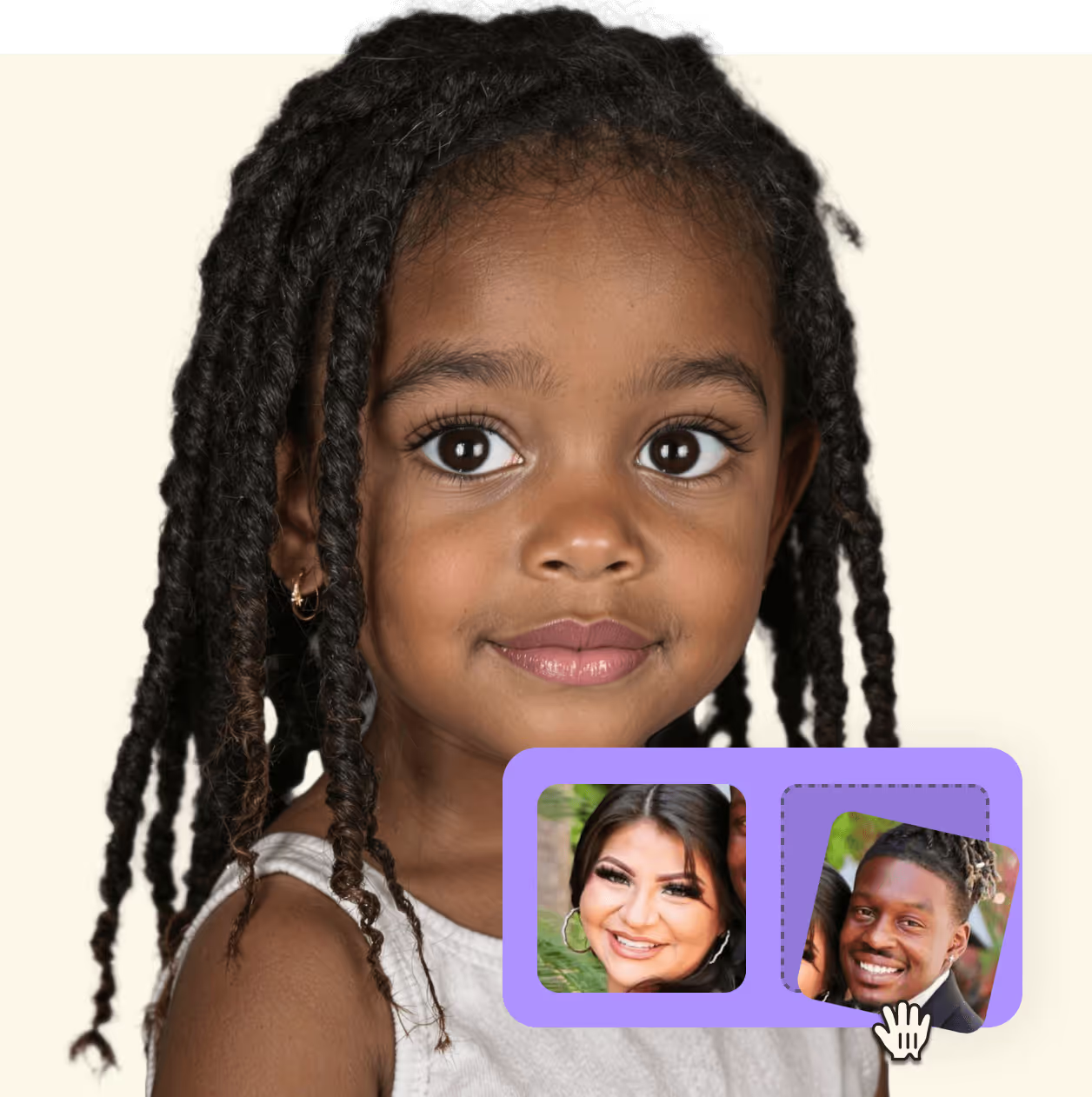
Get A Preview Of What Your Baby Will Look Like
Get instant access to multiple photos of your future child for less than a dinner date. Start your journey of discovery today.
Standard
8 beautiful predictions of your baby at a single age and gender, perfect for your first glimpse into the future.
$9.99
See My Future Baby
One-time payment, no subscription
8 AI-generated baby photos
Single gender
Standard outfit
Basic background
Baby at one age only
Premium
24 varied photos with both genders, different clothes and settings to explore more possibilities of your baby.
$19.99
See My Future Baby
One-time payment, no subscription
24 AI-generated baby photos
Both genders
Different outfits and clothes
Multiple backgrounds
Baby at one age only
Elite
Complete package with 48 photos showing your baby at different ages, outfits, and settings - see every possibility.
$39.99
See My Future Baby
One-time payment, no subscription
48 AI-generated baby photos
Both genders
Different outfits and clothes
Multiple backgrounds
Baby at different ages
M
Maya
December 24, 2024
Perfect anniversery gift!
Surprised my husband with this for our anniversary and he actually teared up (first time ive seen that lol). Definitely get the package with different ages!

Chris L.
December 24, 2024
A bit expensive but worth every $
Ngl the price made me hesitate but after seeing the results... just wow. Got loads of different outfits and backgrounds. processing took like 10 mins tho
L
Laura
December 24, 2024
IN LOVE WITH THIS!!
OMG THE RESULTS ARE AMAZING!! Did both genders and I cant stop looking at the pics!! I wish they had more background options but still 5/5!!!
T
Ty
December 24, 2024
Pretty cool!
Wife wanted to try this and i was like whatever but these are actually insane?? baby looks exactly like what id expect our kid to look like fr fr
Frequently Asked Questions
What a son inherits from which parent, what the AI can and cannot tell you, and how the generator works.
What will my son look like?
He will be a blend of both parents. Face shape, eyes, nose and smile each draw on variants from either side, and he can favour one parent strongly or sit somewhere between the two.
The one thing settled cleanly is sex: a son gets a Y from his father and his only X from his mother. His face is polygenic, so no tool can know the result in advance — but AI can build a realistic preview from your two photos.
The one thing settled cleanly is sex: a son gets a Y from his father and his only X from his mother. His face is polygenic, so no tool can know the result in advance — but AI can build a realistic preview from your two photos.
Which parent does a son look like more?
Neither, as a rule. Attempts to find a parent bias in children's faces have come back inconsistent: an early study reported a father bias, larger follow-ups failed to reproduce it, and some found the opposite.
What does shift is timing. Testosterone in puberty lengthens the jaw and heavies the brow, so a resemblance to the father often reads more strongly in a teenage boy than in a baby.
What does shift is timing. Testosterone in puberty lengthens the jaw and heavies the brow, so a resemblance to the father often reads more strongly in a teenage boy than in a baby.
Who does a son get his Y chromosome from?
His father. A father passes a Y to every son and his single X to every daughter, which is why the father's side determines a baby's sex.
The SRY gene on that Y starts male development in the first weeks of pregnancy. A son's only X comes from his mother, and that is what matters for X-linked traits.
The SRY gene on that Y starts male development in the first weeks of pregnancy. A son's only X comes from his mother, and that is what matters for X-linked traits.
How tall will my son be?
The mid-parental method gives a range: add about 13 cm (5 inches) to the mother's height, average it with the father's, and most boys finish within roughly 10 cm either side of that figure.
It is a population estimate rather than a forecast. Nutrition, general health and the timing of puberty all move the outcome.
It is a population estimate rather than a forecast. Nutrition, general health and the timing of puberty all move the outcome.
Does male-pattern baldness come from the mother's side?
Partly. The strongest single locus is the androgen receptor gene on the X chromosome, which a son inherits from his mother — hence the advice to look at the maternal grandfather.
But it is not one gene. A UK Biobank study of 205,327 men mapped 624 loci, and the 26 X-linked ones accounted for about 12% of the heritability measured. The rest comes from both parents.
But it is not one gene. A UK Biobank study of 205,327 men mapped 624 loci, and the 26 X-linked ones accounted for about 12% of the heritability measured. The rest comes from both parents.
Why do sons get colour blindness more often than daughters?
Because a son has only one X chromosome. The genes for red and green vision sit on it, so a single altered copy has nothing to mask it.
A daughter has two X copies and would need the variant on both, which is why red-green colour vision deficiency reaches roughly 1 in 12 men and about 1 in 200 women. A son inherits it through his mother.
A daughter has two X copies and would need the variant on both, which is why red-green colour vision deficiency reaches roughly 1 in 12 men and about 1 in 200 women. A son inherits it through his mother.
Will my son have my eye colour?
Possibly, but it is not a coin flip between the two of you. Eye colour is polygenic: HERC2 and OCA2 carry the most weight, with several other genes shading the result.
That is why two brown-eyed parents can have a blue-eyed son, and why a baby's eye colour can keep changing through the first year. There is more in our guide to baby eye colour inheritance.
That is why two brown-eyed parents can have a blue-eyed son, and why a baby's eye colour can keep changing through the first year. There is more in our guide to baby eye colour inheritance.
Can AI really show what my son will look like?
It shows a realistic preview, not a prediction. The AI reads the visible features in your two photos — eyes, nose, mouth, face shape — and blends them along common inheritance patterns.
It works from photos, not DNA, so it cannot see a recessive trait that neither parent shows. Treat the image as a plausible version of your son rather than the one you will meet.
It works from photos, not DNA, so it cannot see a recessive trait that neither parent shows. Treat the image as a plausible version of your son rather than the one you will meet.
Can I ask to see a boy specifically?
Yes. Gender is one of the choices you make when you generate, alongside the age stage, so you can see a son rather than leave it to chance.
What ages can I see my son at?
Newborn through to adult. The AI adjusts facial proportions along normal growth patterns, so you can see your son as a baby, as a child and as a grown man.
Faces change fastest in the first years and again through puberty, so the oldest stages are the loosest guesses.
Faces change fastest in the first years and again through puberty, so the oldest stages are the loosest guesses.
Is there a free preview?
No — there is no free preview image.
Producing a realistic result takes real processing, and free tools tend to pay for it with stored photos, reused faces or low-quality output. You pay once, with no subscription, and get the full set.
Producing a realistic result takes real processing, and free tools tend to pay for it with stored photos, reused faces or low-quality output. You pay once, with no subscription, and get the full set.
What happens to my photos?
They are used once to create your images, then deleted.
They are not stored, not reused, not sold, and not used to train the AI.
They are not stored, not reused, not sold, and not used to train the AI.

Turn Your Love Story Into a Glimpse of Tomorrow With Our AI Baby Generator
One-time payment, no subscription