What Will My Mixed Race Baby Look Like? A Guide for Biracial Couples
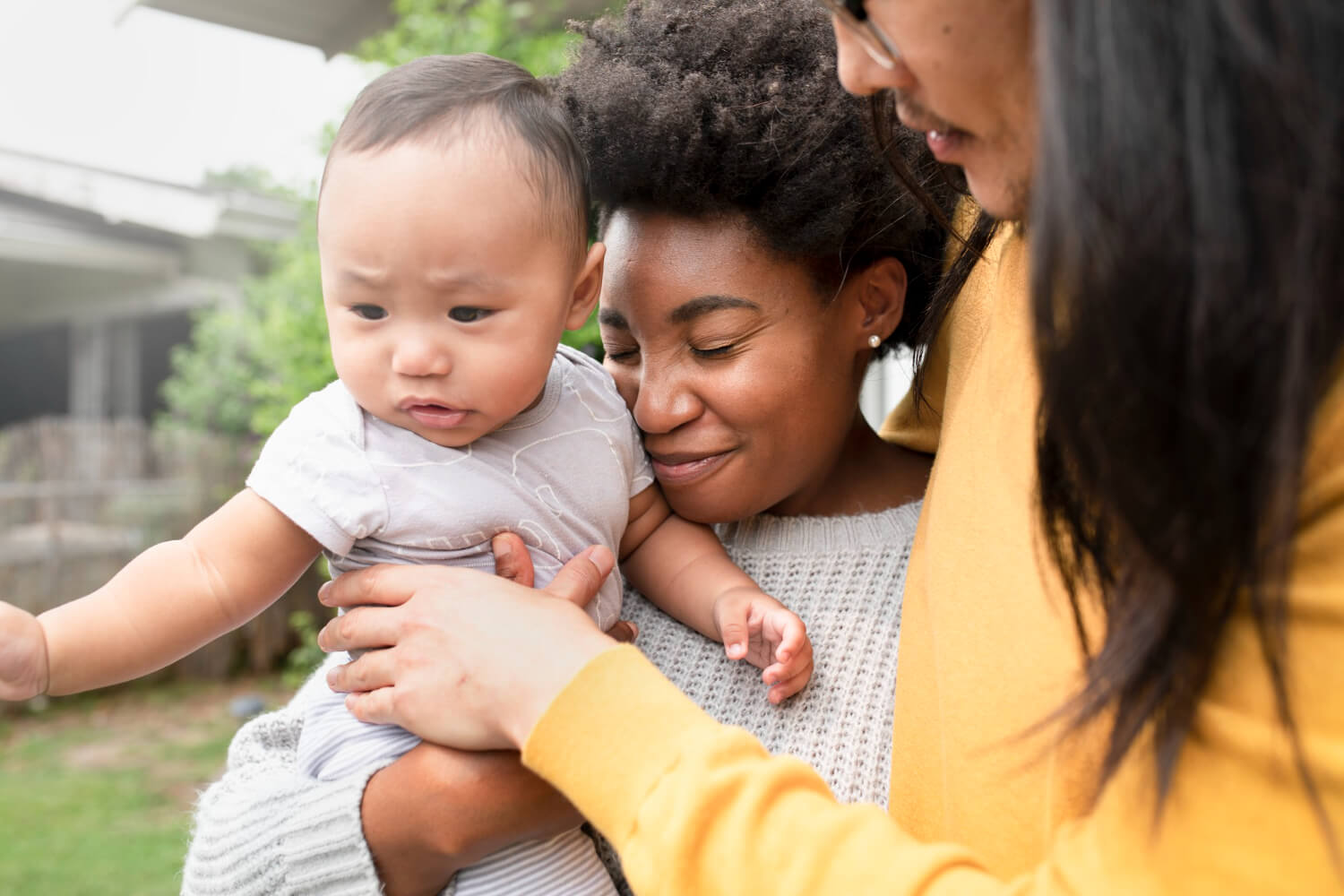
One of the most exciting questions for mixed-race couples expecting a baby is also one of the hardest to answer: what will they actually look like?
Will your baby have your partner's skin tone or yours? Their curly hair or your straight hair? Blue eyes or brown? The honest answer is: it depends on a combination of genetic factors so complex that even scientists cannot predict it with certainty. But there is a lot science can tell you — and it explains why biracial babies are, as a rule, among the most visually surprising and beautiful outcomes of genetic inheritance.
Here is what to expect, trait by trait, and how modern AI can give you a realistic visual preview before your baby arrives.
Why Biracial Babies Are So Unpredictable
Every baby inherits exactly 50% of their DNA from each parent. But which specific genes get passed on — and which ones get expressed — is determined by a combination of chance, dominance hierarchies, and the interaction of hundreds of gene variants working together.
For mixed-race couples, this genetic lottery is particularly wide-ranging. Where two parents from similar ethnic backgrounds might share many overlapping gene variants, parents from different backgrounds often carry a broader set of genetic possibilities. The result: a bigger range of potential outcomes, more surprise combinations, and — often — features that fall entirely outside what either parent predicted.
According to genetics research, "if you're a mixed-race couple, your baby receives half of each parent's skin-colour genes randomly, so she'll usually inherit a blend of both of you. As genes are passed on randomly, it's impossible to predict what your baby's skin colour will be."
That unpredictability is not a bug. It is one of the most remarkable things about human genetics.
Skin Color: What to Expect and When
Skin tone is one of the most commonly asked-about traits for biracial parents — and one of the most genuinely unpredictable.
Skin color is controlled by multiple genes that regulate melanin production. The more melanin, the darker the skin. Because melanin genes come from both parents and interact in complex ways, biracial children can end up with any skin tone between the two parents — or occasionally outside that range entirely.
A few patterns to know:
- A baby with one dark-skinned and one light-skinned parent will most commonly have a skin tone somewhere between the two, but the range is wide.
- Two biracial parents (each with one dark and one light ancestry) can produce children with skin tones across a very wide spectrum — including tones lighter or darker than either parent.
- Darker pigmentation genes generally have more influence than lighter ones, which is why children with one Black and one white parent often have medium to darker skin, though not always.
The "when do mixed babies get their color" question:
This is one of the most Googled questions among new parents of biracial babies — and the answer is that newborn skin color is not final. Most babies, regardless of background, are born lighter than they will eventually be. Melanin production increases over the first weeks and months of life. Many biracial babies appear lighter at birth and gradually deepen in tone over the first six to eighteen months. Their "settled" color often is not fully apparent until after their first year.
Hair: Texture, Curl, and Color Changes
Hair is another trait that surprises biracial families regularly. Texture and curl pattern are influenced by the shape of the hair follicle — a characteristic controlled by multiple genes. Between a parent with straight hair (oval follicle) and a parent with very curly hair (elliptical follicle), a baby might inherit anything from loose waves to tight coils, or something in between.
What to expect:
- Curl pattern is not simply an average of both parents — it depends on which specific gene variants are passed on. A baby with one East Asian parent (typically straight hair) and one Afro-Caribbean parent (typically very curly) could have straight, wavy, or curly hair.
- Newborn hair is often not predictive of adult hair. Many babies are born with very fine, straight hair that later becomes curly. Others are born with curls that relax over time.
- Hair color in biracial babies typically settles into a blend, but since darker pigmentation genes have more influence, dark-haired babies are common when one parent has dark hair.
- Hair color may continue to change throughout childhood. A baby born with light brown hair may darken significantly by age five.
Curl pattern by common combinations (approximate):
| Parents | Likely Hair Texture Range |
|---|---|
| East Asian + White | Straight to slight wave |
| Black + White | Loose curls to tight coils |
| South Asian + White | Wavy to loose curl |
| Latino/Hispanic + White | Wavy to loosely curly |
| Black + East Asian | Wavy to tightly curly |
| Black + Latino | Curly to tightly coiled |
These are general tendencies, not rules. Hair genetics are highly individual.
Eye Color: The Melanin Wildcard
In newborns, eye color is often not what you see at birth. Most babies — including biracial babies — are born with dark gray-brown or bluish eyes, regardless of their eventual eye color. The melanin that determines final eye color takes months to develop.
General patterns:
- Brown eyes are dominant over blue and green. A baby with one brown-eyed and one blue-eyed parent is more likely to have brown eyes, but not guaranteed.
- Biracial babies with one parent of East Asian, South Asian, or African descent typically have brown eyes regardless of the other parent's eye color, since dark-eye genes are dominant.
- Blue or green eyes in biracial babies are possible but more rare — they require recessive alleles from both sides.
- Eye color typically stabilizes between six months and one year of age, though subtle shifts can continue until age three.
For a probability breakdown based on both parents' eye colors, use PredictMyBaby's baby eye color calculator.
Facial Features: Blend, Not Merge
Facial structure — nose shape, jaw, brow line, lip shape, cheekbones — involves the interaction of hundreds of genes, each contributing a small effect. Mixed-race babies do not simply "average" their parents' faces. Instead, they may inherit specific features quite distinctly from one parent, with others coming from the other parent, and some features emerging from the combined interaction of both genetic backgrounds.
This is why biracial children are sometimes described as looking like "the best of both worlds" — they may have one parent's eye shape, the other parent's bone structure, and an overall look that is uniquely theirs.
Some specific patterns:
- Nose shape is polygenic. A baby with one parent who has a broader nose and one who has a narrower nose may have either, or something in between.
- Lip shape is similarly variable. Fuller lips tend to be more dominant in gene expression.
- Face shape (round vs. oval vs. angular) depends on bone structure genes from both parents.
- Dimples are caused by a dominant gene variant — if either parent has dimples, there is a meaningful chance the baby will too.
When Features Settle: A Timeline
Parents of biracial babies often find that their child's apparent appearance shifts significantly in the first two years. A general timeline:
- Birth to 2 weeks: Newborn skin tone is preliminary, features are compressed from birth. Not predictive.
- 1–3 months: True facial structure begins to emerge. Eye shape and brow line become clearer.
- 3–6 months: Skin tone begins to develop toward its settled shade. Hair texture starts showing.
- 6–12 months: Eye color largely stabilizes. Hair texture and amount increase.
- 1–2 years: Skin tone is close to settled. Facial features are becoming distinct.
- Toddlerhood: Most genetic features are visible, though hair color and texture can continue to change through childhood.
How AI Can Show You the Possibilities
Since genetic outcomes for biracial babies are genuinely wide-ranging, one useful approach is to see the space of what your baby might look like — not a single prediction, but a set of realistic possibilities.
An AI baby generator like PredictMyBaby works by analyzing both parents' facial features — bone structure, eye shape, skin tone, and other characteristics — and generating realistic blended predictions using machine learning trained on thousands of parent-child pairs.
For mixed-race couples, this is particularly meaningful: the AI can generate multiple variations, giving you a sense of the range rather than one fixed outcome. PredictMyBaby's Elite package generates 48 photos across multiple ages — from newborn through adulthood — so you can see how your predicted child might evolve over time.
It will not tell you exactly which genetic combination will land. But it gives you something no genetics chart can: a real visual sense of what your family's future might look like.
FAQ
What will my biracial baby look like?
Biracial babies inherit genes from both parents, but the expression of those genes is determined by complex interactions between hundreds of variants. Skin tone will generally fall between the two parents, though it can range widely. Hair texture, eye color, and facial features are all unpredictable — the full range of outcomes between both parents (and beyond) is possible. Most features settle over the first one to two years of life.
When do mixed race babies get their color?
Most babies are born lighter than their eventual skin tone. Melanin production increases over the first weeks and months of life. A biracial baby's skin tone is typically not fully settled until after six to eighteen months, and some continue to darken gradually into the toddler years.
Why does my mixed baby look white?
Newborns are often born lighter than their genetic skin tone. If one parent is lighter-skinned, a baby may appear to have inherited that parent's complexion — and may remain relatively light, or may deepen in tone over the first year. This is a normal part of melanin development and does not indicate the baby's permanent appearance.
Can you predict what a biracial baby will look like?
Not with certainty, but you can narrow the range. Genetic calculators give probabilities for traits like eye color. AI tools like PredictMyBaby generate visual predictions based on both parents' facial features, giving a realistic estimate of what the baby might look like. These are visual previews, not genetic certainties.
Do mixed race babies change how they look as they grow?
Yes, significantly. Skin tone typically deepens in the first year. Hair texture can change from birth through childhood. Eye color settles around six to twelve months. Facial structure continues developing into toddlerhood. Many parents find their biracial child's appearance shifts noticeably between birth and age two.
Will my biracial baby have curly hair?
It depends on which curl-gene variants each parent carries and which get passed on. A baby with one parent who has very curly hair and one with straight hair could have anything from straight to very curly, with wavy being a common outcome. Newborn hair is often not predictive — it frequently changes texture in the first year.
See a Preview of Your Baby's Face
If you want to move beyond the probability charts and see what your family's future might actually look like, our AI baby photo generator is built exactly for this. Upload one photo of each parent and get realistic AI-generated images in minutes — multiple variations, multiple ages, all privately processed and deleted after use.
It is the closest thing to a glimpse of your future child that exists before they arrive.